Content marketing is often treated like a volume game: more posts, more blogs, more reels, more emails. But more content does not automatically create more customers. The real advantage comes from giving each piece a clear role in the buying journey.
A conversion-focused content marketing strategy helps the right people discover your brand, understand the problem, trust your approach and take a useful next step.
Think in customer stages, not content formats
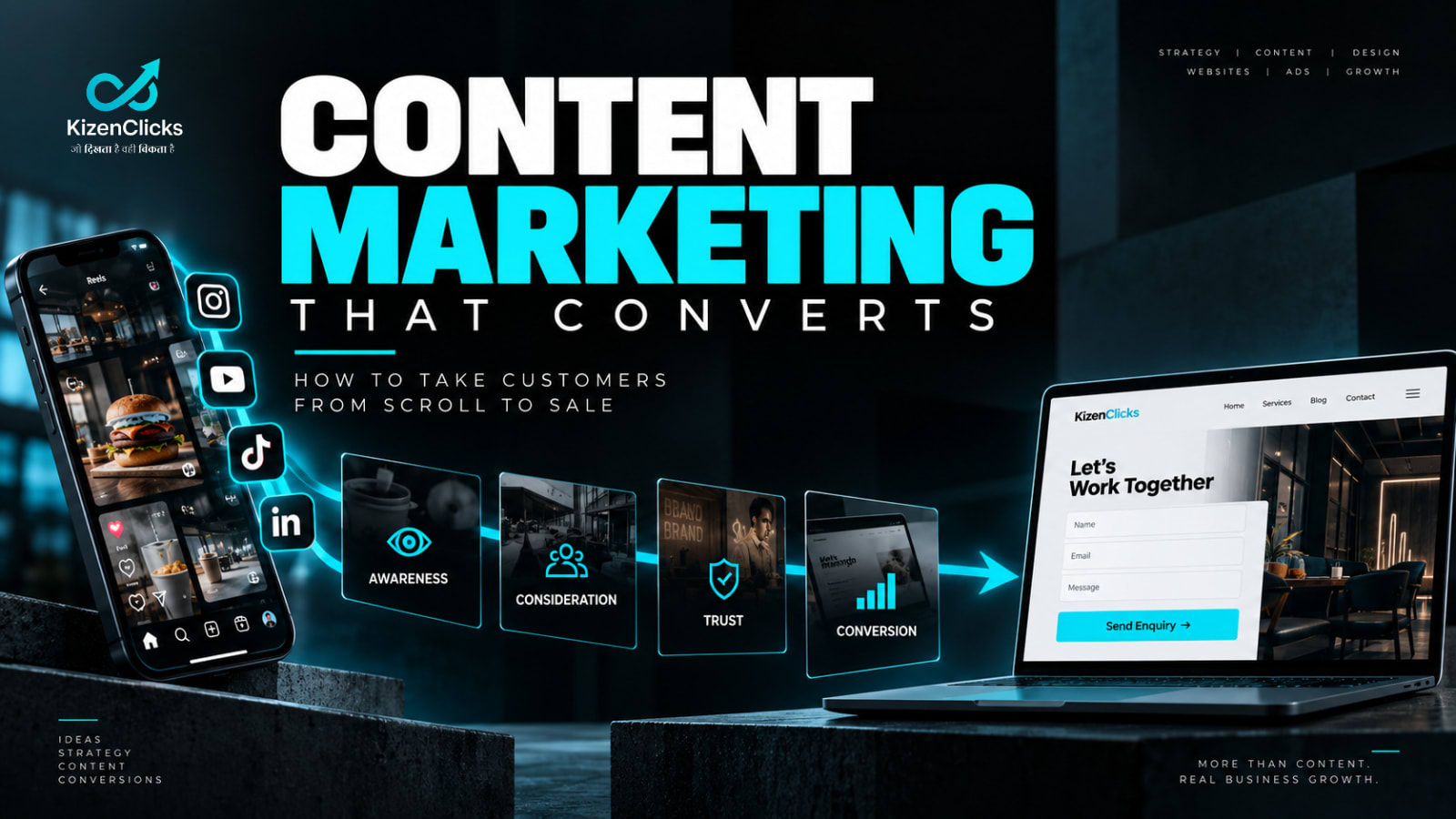
Instead of starting with “we need three reels and two carousels,” start with the audience's level of awareness. Someone who has never heard of you needs different content from someone comparing providers.
- Awareness: identify a problem, opportunity or idea worth noticing.
- Consideration: explain options, trade-offs and how to make a better decision.
- Trust: show proof, process, expertise and consistency.
- Conversion: make the offer, outcome and next step clear.
Once the stages are clear, choose the format that communicates each idea best.
Build content around problems with commercial relevance
The strongest topics sit at the intersection of what your audience searches for and what your business solves. A restaurant marketing agency might discuss local SEO, menu design, reels, Meta Ads and packaging because those topics naturally connect to services.
This does not mean every article should sell. It means your educational content should attract people who may realistically need what you offer.
Create a useful point of view
Generic content is easy to ignore because it sounds interchangeable. Add value through frameworks, examples, checklists, comparisons and clear opinions about process. Explain why one approach works in a certain situation and where it does not.
A useful point of view also makes the brand easier to remember. The goal is to help the reader think differently, not just give them another list of tips.
Connect short-form content to deeper assets
Social posts are excellent for attention, but many buying decisions require more information. Use reels, carousels and posts to introduce an idea, then connect interested users to a detailed blog, service page, case study or landing page.
This creates a content ecosystem. One platform starts the conversation; the website gives the customer enough context to continue it.
Use proof as content, not only as decoration
Proof can be one of the most persuasive content categories. Show project decisions, before-and-after work, client feedback, campaign learning, process footage and common problems solved. When possible, explain what changed and why.
Even without publishing confidential results, a brand can demonstrate competence by showing the quality of its thinking.
Write CTAs that continue the conversation
A CTA should match what the user just consumed. A blog about website conversion can lead to a website audit. A post about packaging can lead to a portfolio. A reel about local marketing can point to a consultation.
The better the match between content and next step, the more natural the conversion feels.
Measure content by contribution, not vanity metrics
Content can influence a sale even when it is not the final click. Track direct leads, assisted conversions, branded searches, profile visits, returning visitors and sales conversations that reference your content.
Then identify the topics that repeatedly attract qualified attention. Those themes should influence future blogs, ads, videos and landing pages.
A simple content marketing framework
- Choose one business goal.
- List the customer questions connected to that goal.
- Map topics to awareness, consideration, trust and conversion.
- Create one strong core asset.
- Repurpose it into short-form content.
- Link every piece to the most relevant next step.
- Review which ideas generate qualified action and repeat them.
Frequently asked questions
How long does content marketing take to work?
It depends on the channel, competition and existing audience. Some content can generate immediate enquiries, while search content and brand authority often build over a longer period.
Should every content piece include a sales CTA?
No. Some content should educate or build trust. The CTA can simply guide the reader to a related resource until their intent becomes stronger.
What is the best content format for lead generation?
The best format is the one that matches the message and audience. High-intent landing pages, proof-led case studies, educational blogs and strong social creative can all contribute to leads.
Content should create movement, not just activity. KizenClicks connects strategy, writing, design, reels, websites and paid distribution so every piece has a role in the customer journey. Talk to KizenClicks about a content system built to turn attention into action.